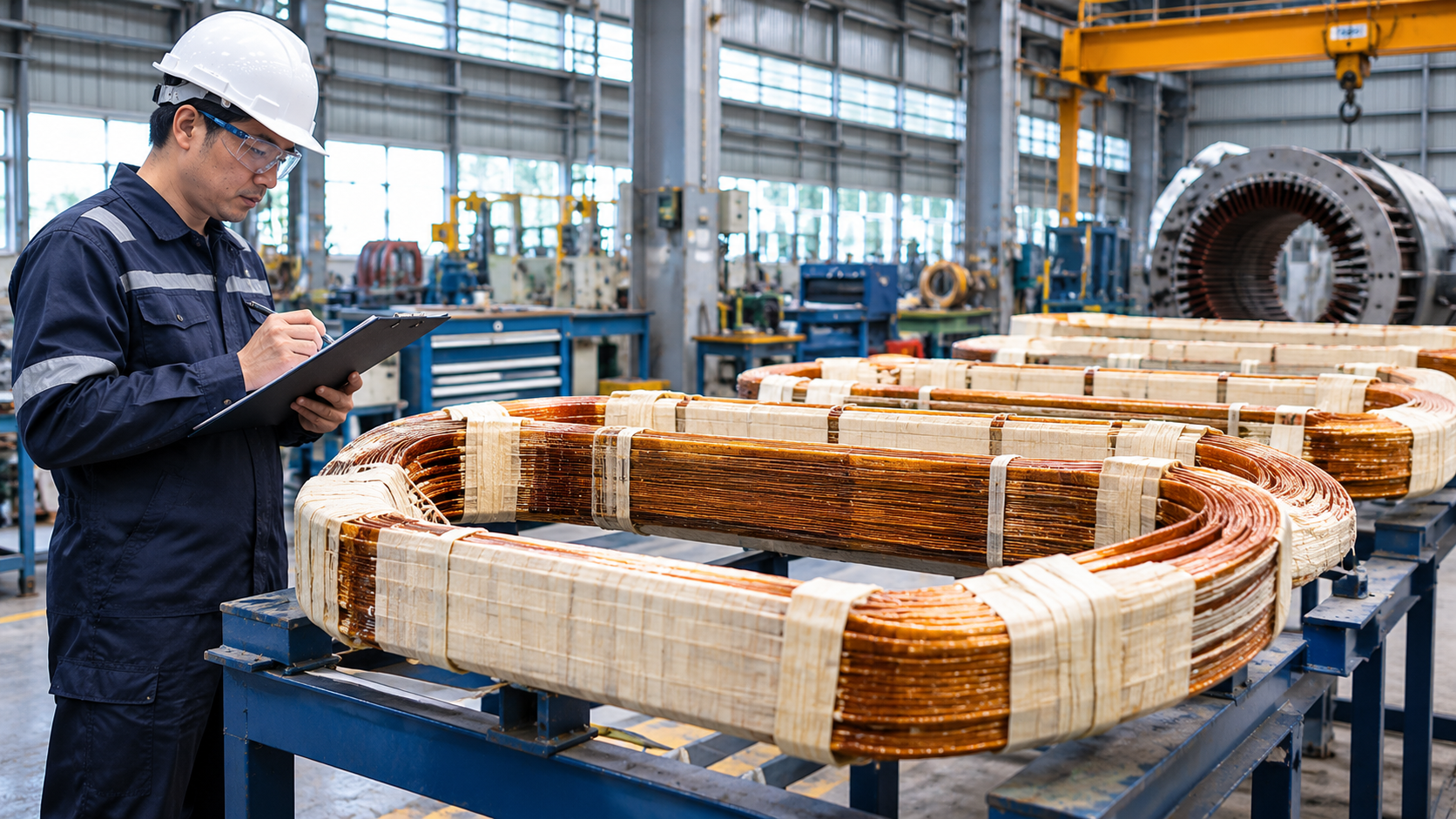
What Must Be Preserved Before a Coil Is Reproduced?
When a damaged coil has to be replaced, the quality of the new coil depends on more than the materials used to manufacture it.
It also depends on how accurately the original winding was understood before it was removed.
If important details are missed too early, the replacement coil may still look acceptable on the bench but create problems later during installation, electrical testing or operation.
That is why winding data capture is not a paperwork exercise. It is a practical engineering step that helps preserve the information needed to reproduce a coil that fits the machine, matches the intended electrical design and supports reliable service.
Before a coil is reproduced, engineers should preserve the information that defines how the original coil was built, how it fits the machine and how it connects into the winding system.
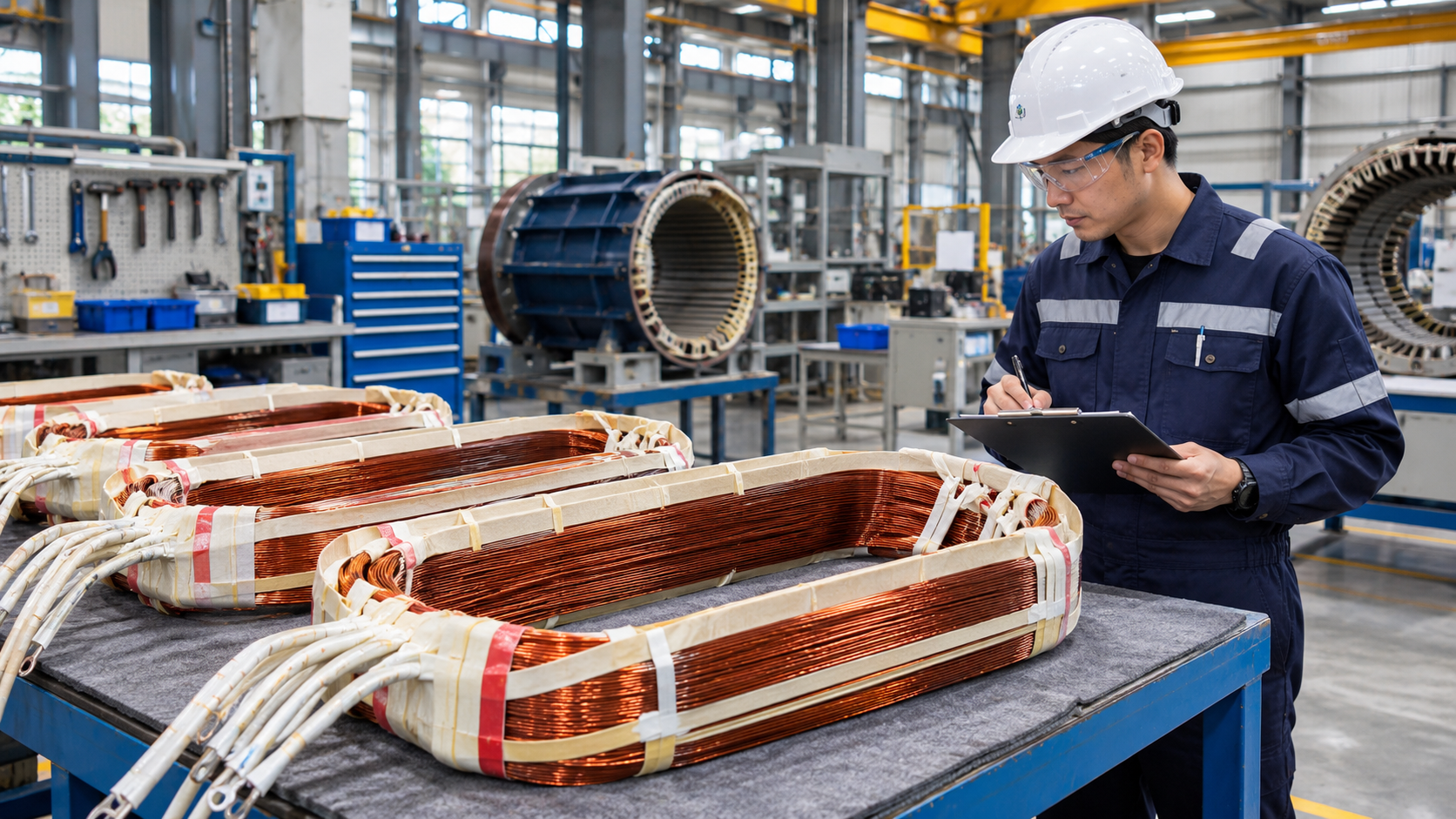
Why Winding Data Capture Comes Before Coil Manufacturing
Once an original coil is removed, some of its most useful information may be lost or become harder to recover.
That is especially true when the winding is already damaged, burned, mechanically distorted or partially destroyed during removal.
A reproduction project therefore starts before the new coil is made. It starts when the repair team records the original winding in enough detail to understand what must be reproduced and what must be reviewed by engineering.
Good data capture helps answer three essential questions:
- What did the original coil look like and how was it built?
- How did it fit into the machine and connect with the rest of the winding?
- Which features must be reproduced exactly, and which require technical review before manufacturing?
What Data Should Be Preserved Before a Coil Is Reproduced?
1. Machine and Application Information
Coil data should not be separated from machine context.
Before reproducing a replacement coil, the team should record the machine nameplate, application, operating duty and any available OEM drawing or historical repair record.
Useful starting information may include:
- Machine type and service application
- Rated voltage, current, frequency and speed where relevant
- Power or kVA rating
- Frame or machine identification
- Available winding drawings, previous repair records or test records
- Observed failure condition and repair scope
This information helps engineering teams interpret the coil data correctly instead of treating the removed coil as an isolated component.
2. Conductor Data
One of the first priorities is recording the conductor itself.
That includes conductor material, size, shape and construction. A replacement coil may depend on details that are not obvious from a quick visual check.
Examples include:
- Conductor width and thickness
- Round, rectangular or transposed conductor construction
- Number of strands, where applicable
- Arrangement of parallel conductors
- Lead construction and termination style
If the coil uses formed copper conductors, the physical build and arrangement should be documented carefully because small differences can affect fit and electrical balance.
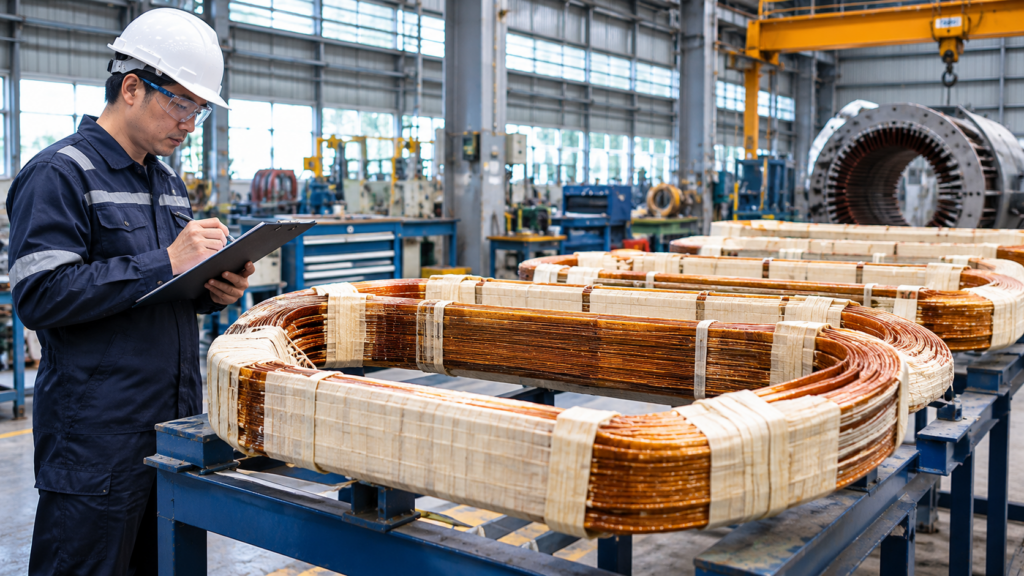
3. Coil Geometry and Critical Dimensions
A replacement coil must fit the machine, not just the drawing.
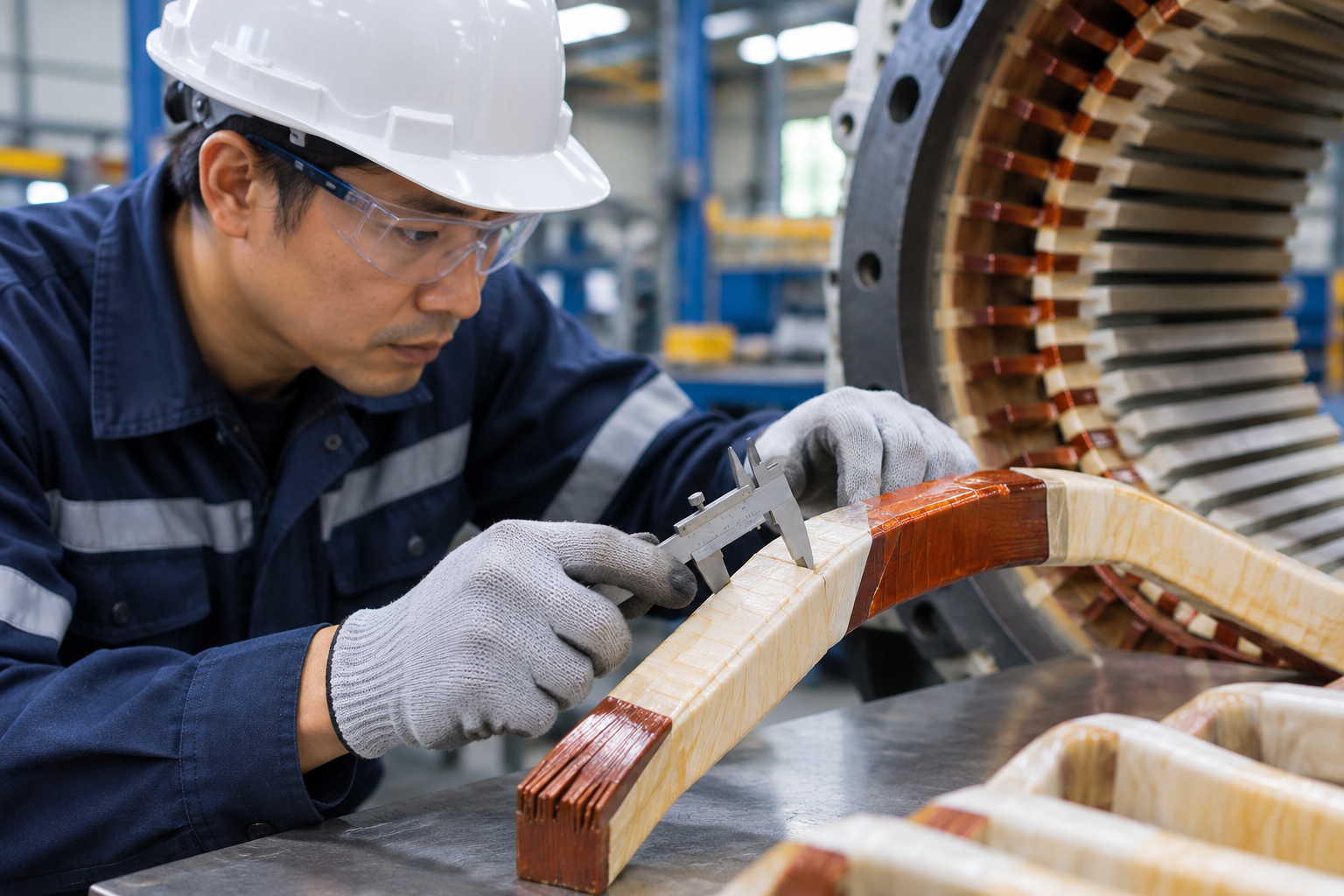
That is why dimensional capture is one of the most important parts of the process.
The team should preserve the dimensions that define how the coil sits in the slot, how its bends are formed and how the end-turns occupy space within the winding.
Common examples include:
- Overall coil length and width
- Slot section dimensions
- Bend radii and formed geometry
- End-turn height, spread and projection
- Lead exit orientation
- Spacing and orientation of parallel paths
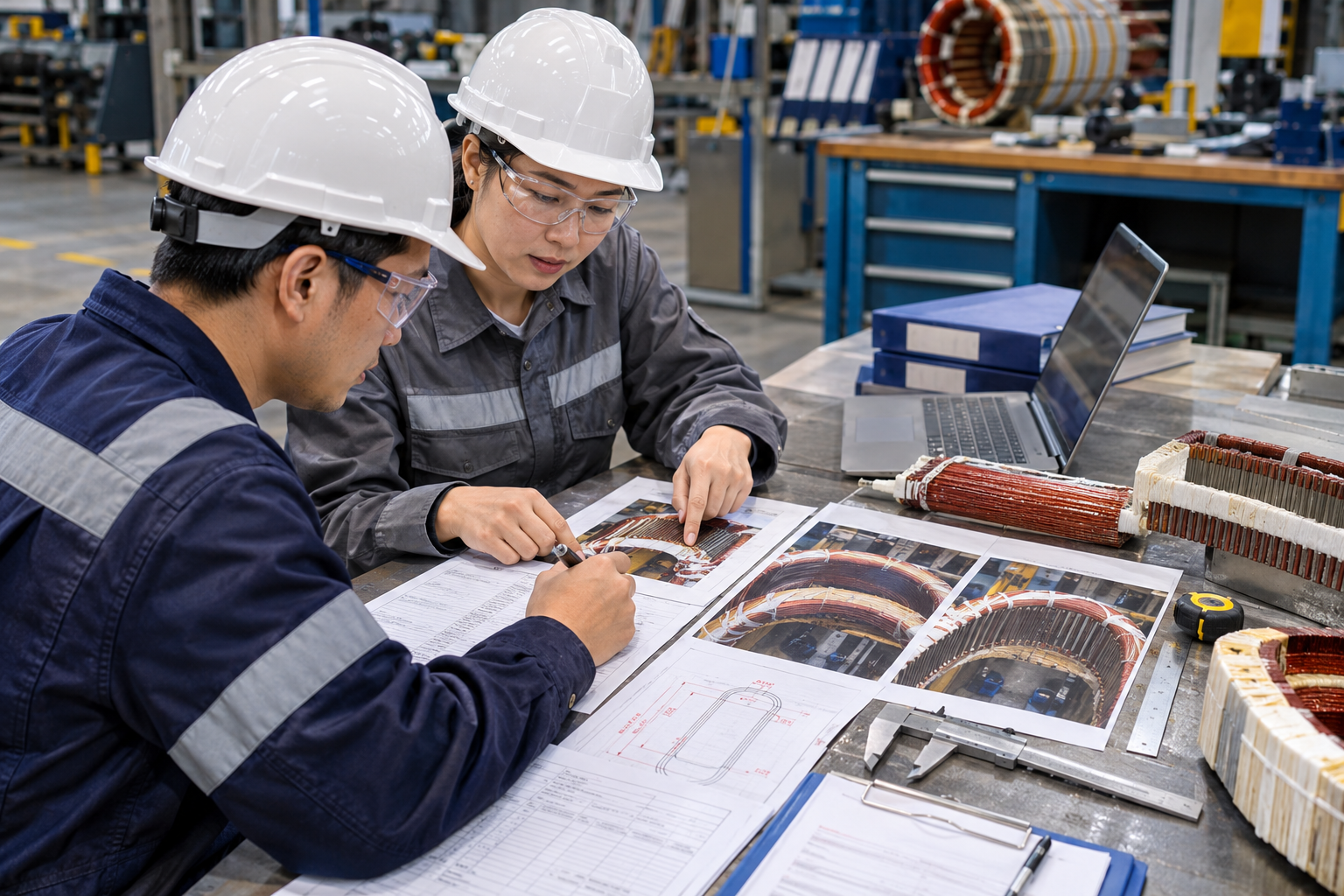
Simple dimensions may not be enough. For some coil types, templates, sketches and detailed photographs are also useful because three-dimensional geometry can be difficult to reconstruct from a few numbers alone.
4. Insulation System Details
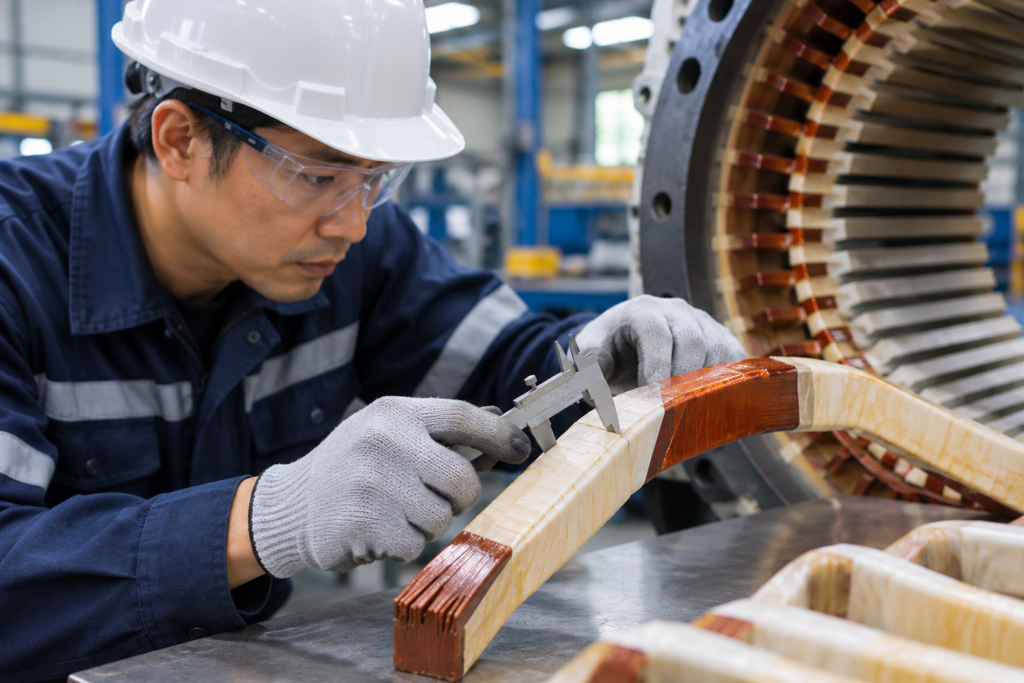
A coil is not defined by copper alone.
The insulation system affects dielectric performance, slot fit, thermal capability and manufacturability. If it is not recorded properly, the replacement coil may not match the intended build.
Important information may include:
- Ground insulation build
- Turn insulation arrangement
- Separator and packing materials
- Lead insulation construction
- Taping method and overlap pattern where relevant
- Impregnation or process notes, if available
Where the original insulation is damaged, engineering judgement may be required to distinguish original construction from failure-related distortion or contamination.
5. Slot Fit and Interface Data
Even a well-manufactured coil can become a problem if its slot fit is wrong.
Before reproducing a coil, the team should preserve data that shows how the coil fits within the slot system and interacts with slot liners, wedges, spacers and other supporting materials.
This may include:
- Slot opening and slot body dimensions
- Slot liner thickness and arrangement
- Wedge dimensions and position
- Packing or filler details
- Clearance or interference observations during removal
These details help determine whether the new coil should replicate the removed coil exactly or whether the fit needs engineering review because of damage, wear or previous non-standard repair.
6. Connection and Circuit Information
Reproducing a coil without preserving its connection context creates unnecessary risk.
The team should document how the coil connects into the winding system, including lead identification, series or parallel relationships and the physical routing of connections where accessible.
Useful records may include:
- Lead markings or identification tags
- Connection diagrams
- Polarity or phasing observations where applicable
- Joints, brazed areas or terminal details
- Photographs taken before disconnection
Without this information, a replacement coil may be physically correct but still require avoidable troubleshooting during assembly.
7. Manufacturing and Traceability Notes
Some of the most valuable information is not dimensional. It is process-related.
The reproduction record should clearly identify where the data came from, which dimensions were measured directly, which features were estimated from evidence and which items still require technical confirmation.
This helps create traceability between the original winding, the engineering review and the new coil.
Examples include:
- Photographic records of the original coil condition
- Measurement records with units and reference points
- Sketches, templates or section drawings
- Part identification and job references
- Notes on uncertainty, damage or missing evidence
- Revision control for reproduced coil drawings
How Should the Data Be Captured?
A reliable winding data package usually combines several methods rather than relying on one.
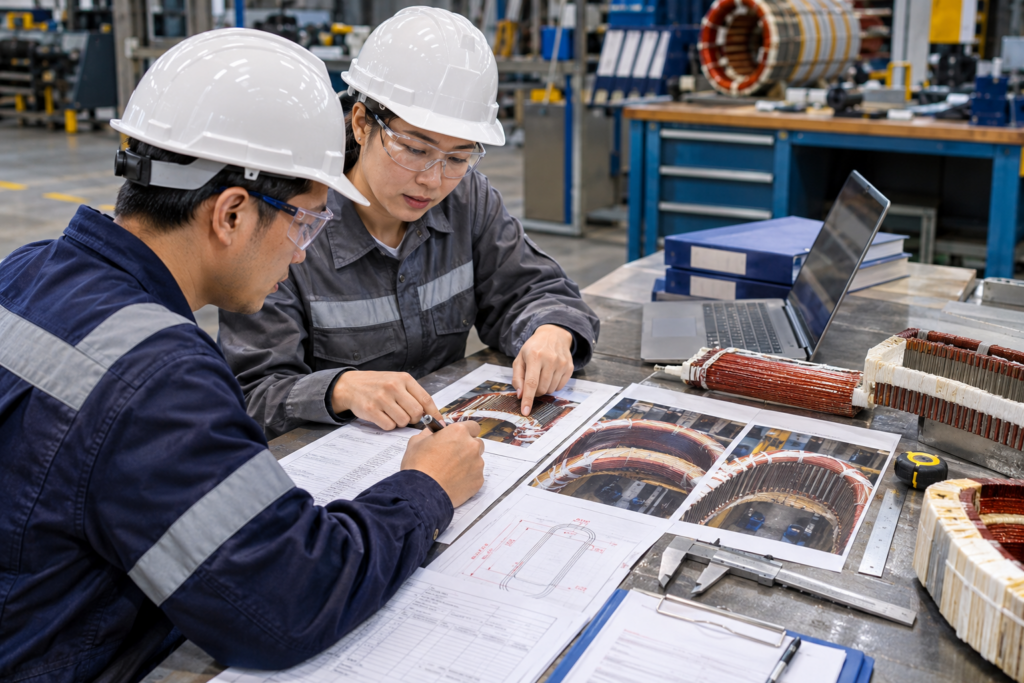
Typical methods include direct measurement, photographs, marked sketches, sample sections, templates and review of available OEM or historical documentation.
The goal is not to collect data for its own sake. It is to preserve enough accurate information so the replacement coil can be manufactured and installed with confidence.
In many cases, a practical data-capture package will include:
- A coil identification sheet
- Dimensional measurement records
- Photographs of slot sections, leads and end-turns
- Insulation build notes
- Connection references
- Engineering review comments
SAMPLE IMAGE 3 — MEASUREMENT & DOCUMENTATION Sample placement for a measurement and documentation image showing how dimensional records, sketches and winding photographs support coil reproduction.
What Happens When Important Winding Data Is Missed?
Missing data does not always cause an immediate visible problem. Sometimes it appears later.
A reproduced coil may need rework because of poor fit. Installation may take longer because lead orientation is wrong. Insulation build may differ from what the slot can accommodate. Connection details may need to be reverse-engineered again after manufacturing is complete.
In more serious cases, the missing information can contribute to electrical or mechanical reliability concerns after the machine returns to service.
That is why data capture should be treated as part of the repair process, not as an optional extra before production begins.
Questions Worth Asking Before Authorizing Coil Reproduction
- Which original coil details have been measured directly?
- Which details were taken from drawings or records?
- What evidence exists if the original coil is badly damaged?
- Has slot fit been reviewed against the actual machine?
- Are insulation materials and build requirements clearly defined?
- Have lead orientation and connection details been documented?
- Is there a traceable record linking captured data to the new coil drawing?
Better Coil Reproduction Starts With Better Information
Reproducing a replacement coil is not only a manufacturing task. It is also an information task.
The new coil can only reflect the quality of the data captured before production begins.
When conductor details, dimensions, insulation, slot fit and connection information are preserved properly, engineering teams can make better decisions and manufacturing teams can work with greater confidence.
For critical motors and generators, that foundation is often what separates a straightforward reproduction job from a difficult one.
Discuss Coil Reproduction Requirements With Kamol Engineering
Kamol Engineering provides made-to-order coils and rewinding services for motors and generators.
If you are planning a coil reproduction project, useful starting information includes the machine nameplate, original coil photographs, available drawings, dimensional records, insulation details and any observations made during removal.
Those details help define the engineering questions before manufacturing begins.
Explore Coil Manufacturing Services
Explore Stator Rewinding Services
Frequently Asked Questions
What is winding data capture?
Winding data capture is the process of preserving the original technical information needed to repair, reproduce or redesign a coil or winding component accurately.
Why should winding data be recorded before removing the original coil?
Because important evidence may be lost after removal. Early recording helps preserve conductor, insulation, dimensional and connection details that are harder to recover later.
Which dimensions matter most when reproducing a coil?
That depends on the coil type, but critical data often includes slot section dimensions, overall coil geometry, bend radii, end-turn dimensions and lead orientation.
Is the original coil always reproduced exactly?
Not necessarily. Some projects require engineering review because the original coil may have been damaged, altered previously or no longer represent the correct design intent.
Why is slot-fit information important?
Because a replacement coil must fit the actual machine. Incorrect fit can complicate installation, affect insulation build and introduce avoidable rework.
What should be included in a coil reproduction enquiry?
A useful enquiry may include machine nameplate details, coil photographs, drawings, measurements, insulation information, connection notes and the scope of repair or replacement required.
Technical References
Kamol Engineering — Rewinding Stator
ANSI/EASA AR100-2025: Recommended Practice for the Repair of Rotating Electrical Apparatus
Editorial note: This article provides general engineering guidance on winding data capture before coil reproduction. The exact data package required depends on the machine type, winding design, damage condition and repair scope. Dimensions, materials, process notes and acceptance criteria should be reviewed against the actual machine and applicable engineering requirements before manufacturing.