Process Control & Traceability in High-Voltage Coil Manufacturing
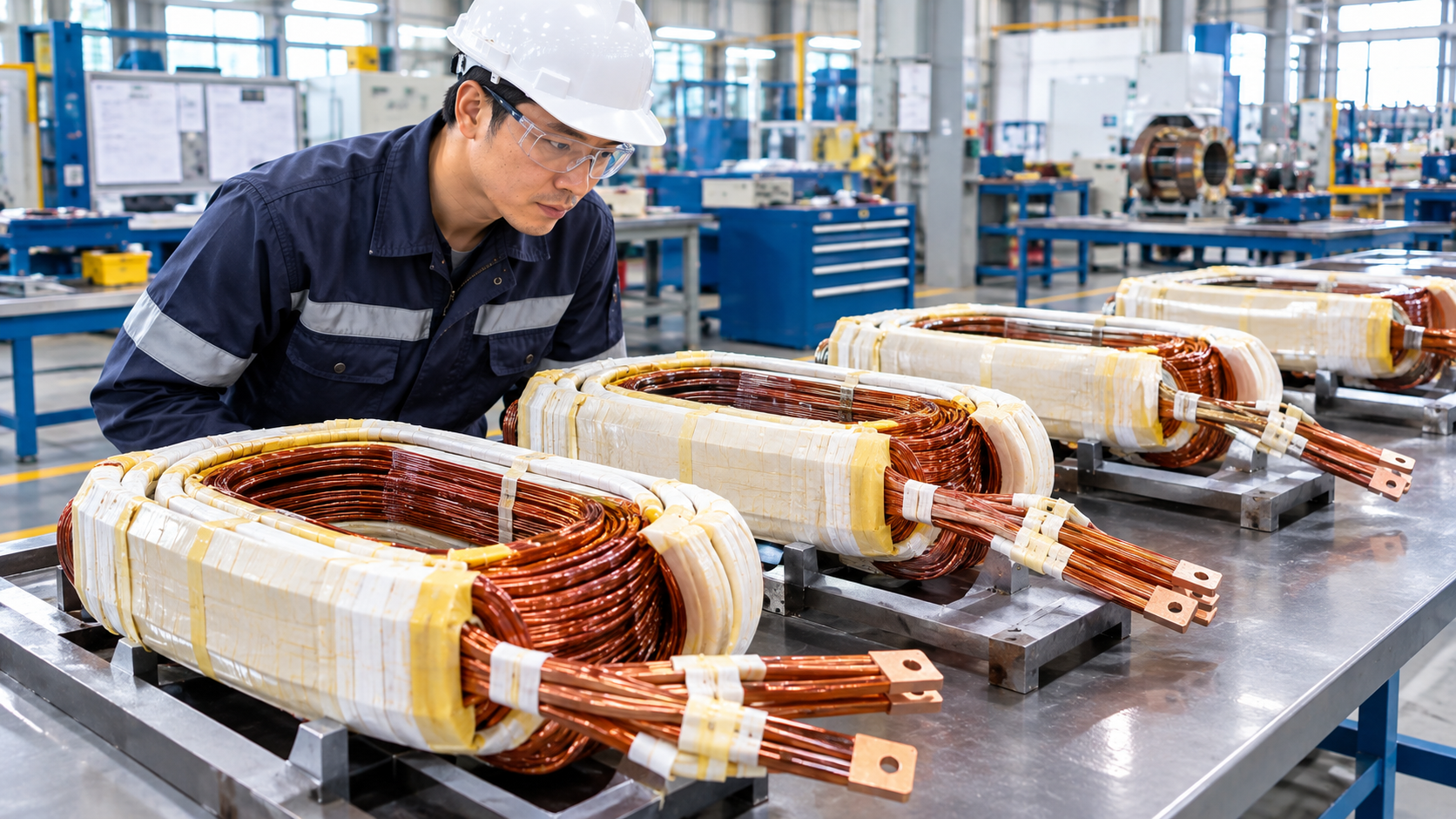
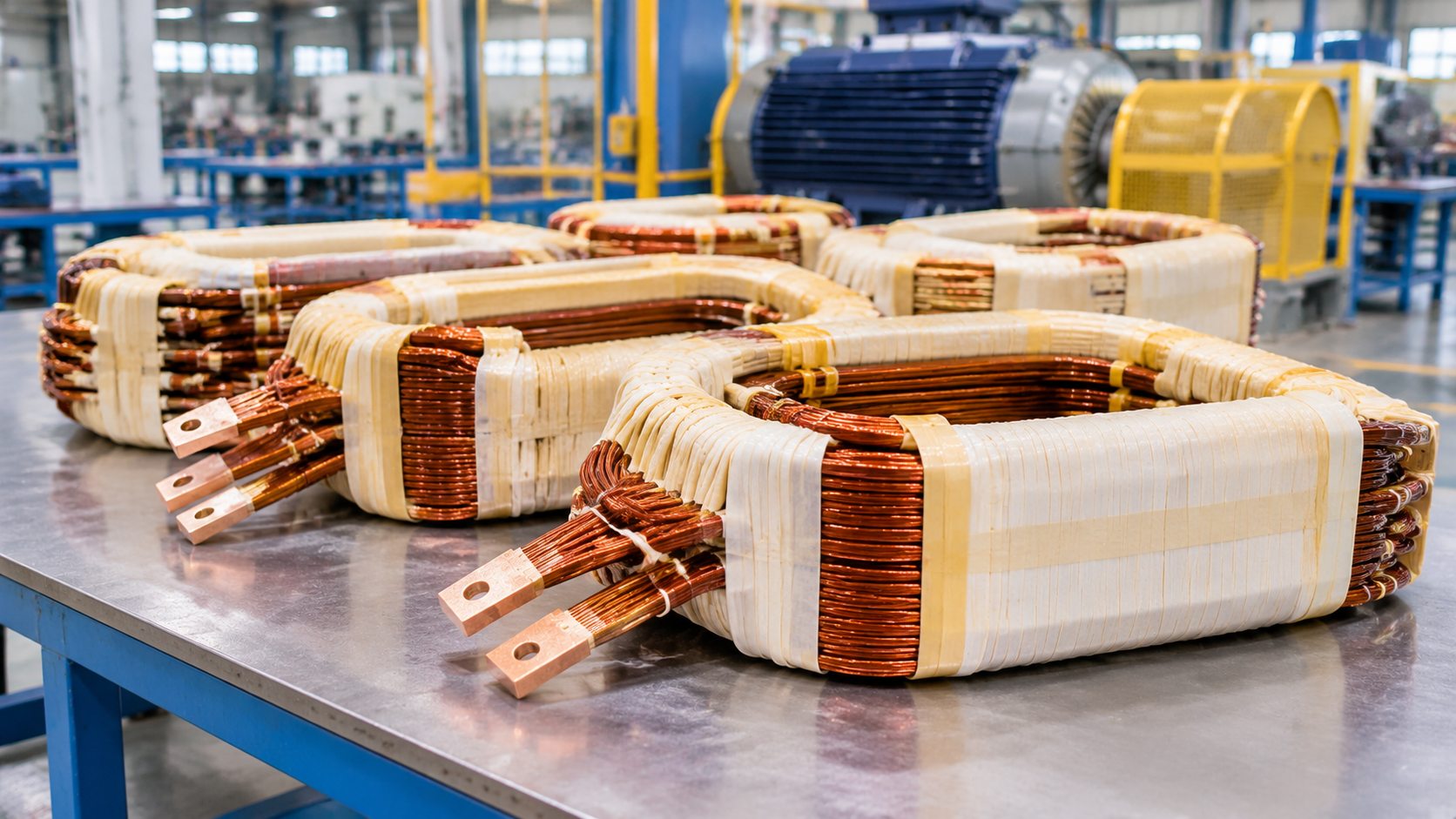
Two finished coils can look almost identical on a workshop bench.
Their copper conductors may have the same shape. The insulation may look neatly applied. Both may appear ready for installation.
But appearance does not tell the whole story.
Were the conductor dimensions checked against the approved drawing? Were the correct insulation materials used? Was the forming process controlled? Were any changes reviewed? And what evidence is available to show how each coil was made?
These are important questions in high-voltage coil manufacturing, particularly when the coils are intended for critical industrial motors and generators.
Quality is not established by the finished appearance alone. It depends on controlling the manufacturing process and retaining evidence of the work performed.
What Does Process Control Mean in High-Voltage Coil Manufacturing?
Process control means managing the manufacturing steps that affect whether a coil meets its approved engineering requirements.
It starts with knowing which design must be produced. It continues through material selection, conductor preparation, coil forming, insulation application, any specified treatment processes, inspection and final release.
Each stage should have the information and controls appropriate to the coil design.
For example, a forming operation may require dimensional checks, while an insulation process may require verification of material identity, application method and specified processing conditions.
The important distinction is that an inspection at the end cannot necessarily reveal every problem that developed earlier.
Process Control Is More Than a Final Inspection
Final inspection answers an important question: does the completed coil meet the checks specified for release?
Process control asks a broader question: were the manufacturing conditions managed in a way that supports the intended result?
Both are necessary considerations. They do not replace one another.
Start With an Approved Manufacturing Specification
Before production begins, the manufacturing team needs a clear technical basis for the work.
This may include an approved drawing, conductor specification, insulation requirements, dimensions, connection details and the applicable inspection plan.
The specification must also identify which requirements are critical for the particular coil.
High-voltage form-wound coils are not all interchangeable. Different machines can require different insulation systems, shapes, lead arrangements and processing methods.
Why Drawing Revision Control Matters
Imagine that a coil drawing is revised after a fit issue has been discovered.
If the production team continues using an earlier revision, the new coil may be manufactured to dimensions that engineering has already changed.
That is why the released drawing revision needs to be identifiable at the point of manufacture.
The same principle applies when materials, manufacturing steps or acceptance requirements change.
Production should follow the approved information, with changes reviewed and recorded through an appropriate engineering process.
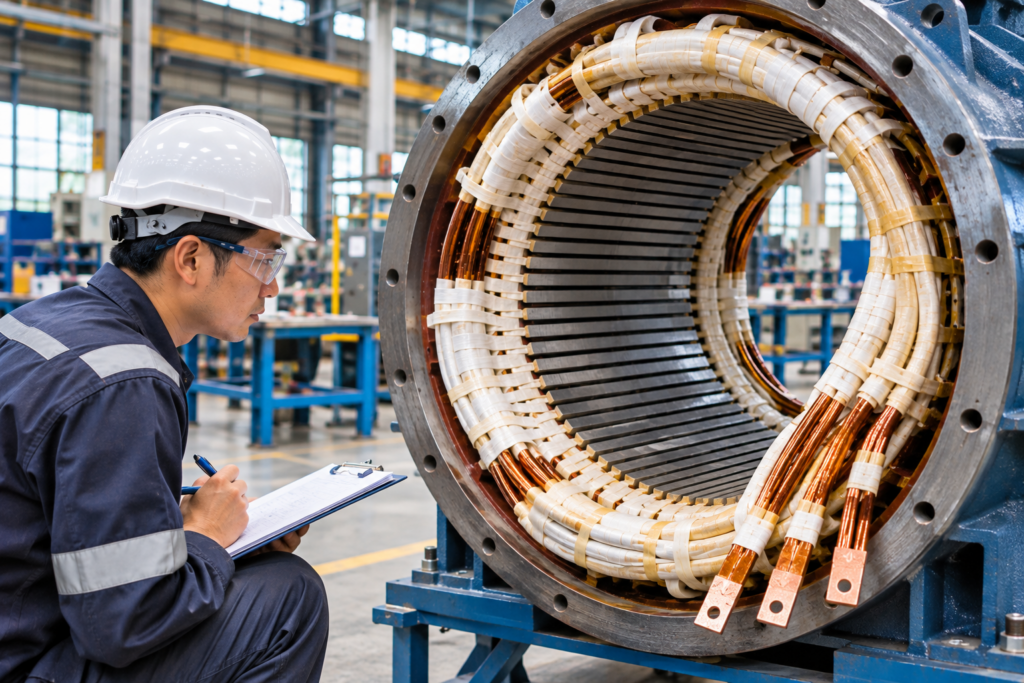
Key Manufacturing Checkpoints That Deserve Attention
1. Material Identification and Receiving Checks
Before conductor preparation or insulation work begins, the team should know which materials have been supplied for the job.
Depending on the specification, this may involve checking conductor dimensions, material identification, insulation material type and relevant supplier documentation.
Where material traceability is required, identification should remain linked to the coil or production batch.
This matters because two materials that look similar may not have the same electrical, mechanical or thermal characteristics.
Substituting a material simply because it is available should not be treated as a routine shop-floor decision when the change affects the approved design.
2. Conductor Preparation and Coil Forming
Forming gives the conductor assembly its required geometry. It is also a stage where dimensional errors or insulation damage can be introduced.
Relevant checks may include conductor size, formed dimensions, bend geometry and the condition of insulation already applied to the conductors.
The required checks depend on the coil construction.
Some coils use rectangular copper conductors. Others use more complex conductor arrangements, including transposed conductors for specific machine designs.
A Roebel bar, for example, is not simply an ordinary coil with a different name. Its conductor arrangement and transposition are features of a particular design.
Forming and dimensional checks should therefore follow the approved manufacturing requirements for the actual product.
3. Insulation Application
High-voltage coil insulation is a system, not just a covering wrapped around copper.
Depending on the design, it may include turn insulation, mainwall insulation, additional separation materials and stress-control features.
The insulation build must suit the electrical and thermal requirements while remaining compatible with the intended coil geometry.
Process controls can include confirmation of the material, application sequence, coverage and specified build dimensions.
Insulation should also be inspected for visible damage or irregularities at the stages when those areas remain accessible.
One important point is that an insulation material’s thermal class alone does not establish that the entire insulation system is suitable for every high-voltage application.
4. Impregnation and Curing, Where Required
Some coil designs and insulation systems require impregnation or a defined thermal curing process.
Others may use different manufacturing arrangements. The correct method depends on the approved design and materials.
When impregnation or curing is required, the process record may need to identify the specified material system, applicable processing parameters and evidence that the prescribed procedure was followed.
For example, a resin system may require particular temperature and time conditions. Those conditions should come from approved process documentation and the material manufacturer’s instructions.
Vacuum-pressure impregnation, or VPI, is one possible process. Its use alone does not prove that a winding is free from all defects or that every insulation requirement has been satisfied.
5. In-Process Dimensional and Visual Inspection
Not every important feature remains visible at the end of production.
Once further insulation or treatment has been applied, it may become difficult to inspect the underlying conductor arrangement.
This makes in-process checks valuable.
Examples may include coil section dimensions, formed geometry, lead position, insulation condition and other features identified as critical by engineering.
Inspection records should identify the relevant acceptance criteria and measurement conditions when necessary.
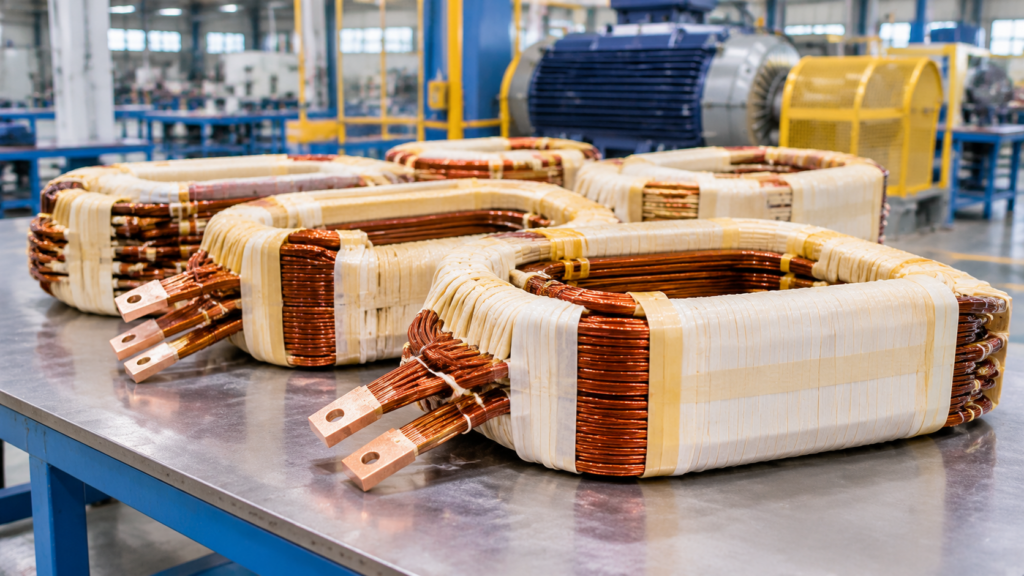
What Is Traceability in Coil Manufacturing?
Traceability is the ability to connect a manufactured coil with the information that explains its identity, materials, production history and inspection status.
It is not the same as keeping every document in a folder.
The records must have a meaningful relationship to the actual coil or batch.
For instance, if an engineer reviews a particular coil, the documentation should make it possible to identify which drawing revision was used, what materials were specified and which inspections or approved processing steps apply to that item.
What Should a Traceable Manufacturing Record Contain?
The details depend on the project, but a practical record may include:
- Job, coil or batch identification
- Approved drawing number and revision
- Applicable material identification or batch references
- Critical dimensional inspection records
- Required manufacturing process records
- Inspection and test results, where applicable
- Any identified nonconformities and their disposition
- Final review and authorized release information
The objective is to create a usable history, not unnecessary paperwork.
Traceability Helps When Questions Arise Later
Suppose a dimensional difference is noticed after a replacement coil has been produced.
Without clear identification and records, the team may have to reconstruct which drawing was used, which dimensions were checked and whether a change occurred during manufacture.
With traceable records, the investigation can begin from documented information.
That does not guarantee an immediate answer, but it can reduce uncertainty and make the technical discussion more focused.
A Practical Process-Control Matrix
The following table illustrates checkpoints that may be relevant to high-voltage form-wound coil manufacturing.
| Manufacturing Stage | Control Question | Possible Record |
|---|---|---|
| Engineering release | Is the approved specification current? | Drawing revision and release record |
| Material preparation | Are the specified conductor and insulation materials identified? | Material identification and receiving checks |
| Coil forming | Does the formed geometry meet the required dimensions? | Dimensional inspection record |
| Insulation application | Was the specified insulation system applied and inspected? | Material and in-process inspection record |
| Treatment, if applicable | Were the required process conditions followed? | Approved impregnation or curing record |
| Final verification | Do the applicable inspections and tests support release? | Inspection, test and release records |
Engineering note: This matrix is an educational example, not a universal mandatory inspection plan. Actual checkpoints, tolerances, test methods and acceptance criteria must be defined for the product and approved project requirements.
How Should Manufacturing Changes Be Managed?
Manufacturing does not always proceed exactly as expected.
A material may become unavailable. A dimensional issue may be discovered. A process may need adjustment.
The important question is how that change is handled.
If the change affects an approved requirement, it should be reviewed through the appropriate engineering and quality process before production continues or the item is released.
For example, changing an insulation material should not be justified only by comparing its nominal thermal class with the original material.
Compatibility with the complete insulation system and the intended manufacturing process may also matter.
What Happens When a Nonconformity Is Found?
When an inspection identifies a condition outside the applicable requirement, the affected item should be identified and managed under the relevant nonconformity procedure.
The decision may involve correction, further assessment or an authorized disposition, depending on the nature of the issue.
The outcome should be recorded where required, including any relevant approval.
Simply removing an unsuccessful measurement from a report does not resolve the underlying problem.
Where Does Electrical Testing Fit Into the Process?
Electrical testing provides valuable evidence, but it does not replace manufacturing control.
The suitable tests depend on the coil design, insulation system, manufacturing stage and applicable repair or product specification.
Possible assessments may include resistance measurements, insulation-related tests and other specified electrical checks.
However, not every test is suitable for every coil, and the same test voltage or procedure cannot be applied universally.
Routine Testing and Insulation-System Qualification Are Different
An important distinction exists between checking a manufactured coil against agreed release requirements and qualifying an insulation system for a particular application.
Insulation-system qualification may involve evaluation procedures that go beyond routine checks on an individual manufactured coil.
For example, IEC 60034-18-32 addresses electrical endurance qualification of certain form-wound insulation systems. It should not be treated as a universal checklist requiring every individual coil to undergo the same qualification tests.
Engineers should identify the actual standards, customer specifications and acceptance criteria that apply to the product being supplied.
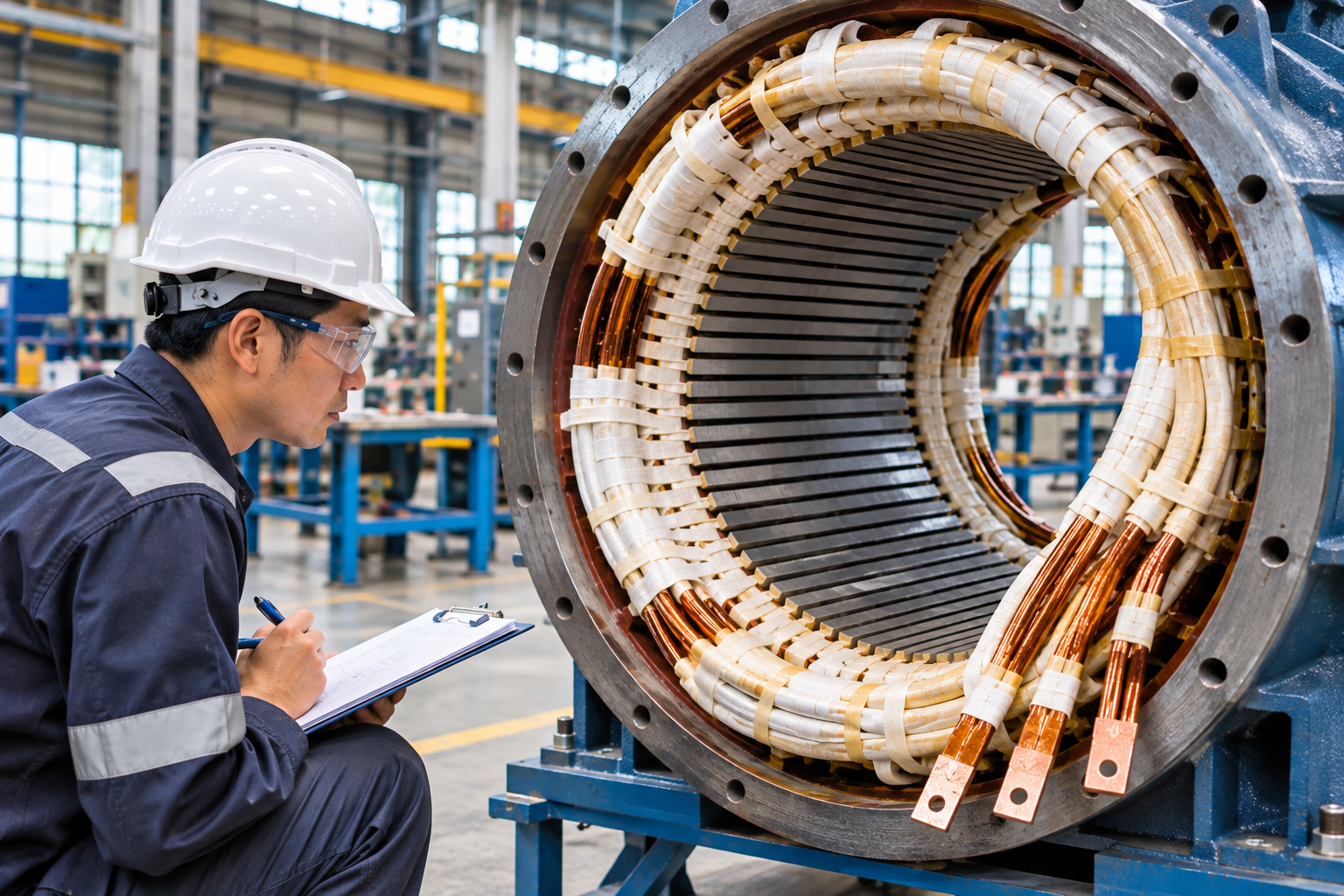
SAMPLE IMAGE 3 — PROCESS CONTROL & TRACEABILITY RECORDS Sample image placement for manufacturing inspection sheets, approved drawing revisions, material records and engineering review.
What Should Customers Ask a Coil Manufacturer?
When evaluating a supplier for high-voltage coils, customers should ask for information that helps them understand how the work will be controlled.
Useful questions include:
- Which drawings and specifications will govern manufacturing?
- How are conductor and insulation materials identified?
- Which dimensions are considered critical?
- At what stages will inspections take place?
- Which impregnation or treatment steps apply to this design?
- What tests are appropriate before release?
- How are deviations and changes reviewed?
- Which inspection and traceability records can be supplied?
The answers should be relevant to the actual coil and contract requirements.
A large quantity of documentation is not automatically better. What matters is whether the information supports the technical decisions that need to be made.
Why Process Control Matters Beyond the Workshop
For a maintenance or reliability engineer, a replacement coil is usually part of a larger equipment decision.
The machine may be needed for a planned shutdown, a repair project or a return-to-service schedule.
Clear manufacturing controls and traceable records can support communication between the supplier, customer and engineering team.
They can help clarify what was manufactured, what was checked and which requirements were used for evaluation.
They can also provide a more useful starting point if a question arises during installation or later review.
This does not guarantee a particular service life or eliminate the possibility of future failure. It supports more transparent engineering decisions.
Quality Should Be Visible in the Records, Not Only in the Finished Coil
A well-formed coil is a useful first impression. But for critical equipment, the manufacturing history deserves attention too.
The approved design, identified materials, controlled operations, in-process checks and final verification all contribute different kinds of evidence.
Together, they help explain how the finished product was produced and evaluated.
In high-voltage coil manufacturing, a convincing quality discussion should be able to move from the finished coil back through the manufacturing process.
Discuss High-Voltage Coil Manufacturing With Kamol Engineering
Kamol Engineering Services Co., Ltd. offers made-to-order coil manufacturing for industrial electrical applications.
Its published service information includes configurable conductor, insulation and geometry parameters, together with manufacturing and inspection options that depend on the project.
When preparing an enquiry, useful information includes the machine application, approved drawings, coil dimensions, insulation requirements, quantity and any specific inspection or documentation expectations.
Customers should confirm the applicable manufacturing process, testing scope and deliverable records for their own project before placing an order.
Explore Made-to-Order Coil Manufacturing
Learn About Roebel Bar Manufacturing
Frequently Asked Questions
What is process control in high-voltage coil manufacturing?
Process control means managing the manufacturing steps that affect whether a coil meets its approved requirements. It can involve drawing control, material identification, forming checks, insulation application, treatment processes and inspection.
What does traceability mean for a manufactured coil?
Traceability means being able to connect a coil with relevant information about its identity, approved specification, materials, manufacturing history and inspection or release status.
Why is final electrical testing not enough by itself?
Electrical testing provides important evidence, but some manufacturing issues may involve dimensions, materials or intermediate conditions that a selected final test does not assess. Process controls and final verification serve different purposes.
Does every high-voltage coil require vacuum-pressure impregnation?
No. The required insulation treatment depends on the coil design and specified insulation system. VPI is one possible manufacturing process and should not be assumed for every coil.
Which manufacturing records should a customer request?
Depending on the project, useful records may include the approved drawing revision, relevant material identification, critical dimensional results, required process records, inspection and test reports, and authorized release information.
Can insulation materials be substituted if they have the same thermal class?
Not automatically. Material compatibility and the performance of the complete insulation system may need engineering review. A thermal-class designation alone is not sufficient evidence of interchangeability.
Do all high-voltage coils require the same electrical tests?
No. Test methods, levels and acceptance criteria depend on the winding design, insulation system, manufacturing stage and applicable project requirements. Qualification testing and routine product testing should also be distinguished.
Technical References
Kamol Engineering — Made-to-Order Coils
EASA — ANSI/EASA AR100-2025: Recommended Practice for the Repair of Rotating Electrical Apparatus
IEC 60034-18-1:2022 — General Guidelines for Insulation-System Evaluation
IEC 60034-18-32:2022 — Electrical Endurance Qualification for Form-Wound Insulation Systems
Editorial note: This article describes general engineering considerations for process control and traceability. The inspection checkpoints and record examples are educational; they are not presented as Kamol Engineering’s documented internal procedures. Actual manufacturing methods, test requirements and acceptance criteria depend on the approved product specification. Reference to EASA or IEC does not establish company certification or project-specific compliance.