After Repair Why Condition Trending Matters More Than One Reading
The motor has been repaired. The inspection records have been reviewed, the required workshop tests are complete, and the equipment is ready for the next stage of its return to service.
For the maintenance team, that is an important milestone.
But the next question is just as important: how will the motor behave when it returns to normal operating conditions?
A measurement taken during testing tells engineers something about the machine at that particular moment. It does not necessarily show how the machine will respond to changing loads, operating temperatures, starts, stops or continued service.
That is where condition trending becomes valuable.
Post-repair condition trending means collecting comparable measurements over time to identify meaningful changes in a motor’s operating condition.
Instead of asking only whether a reading was acceptable on one occasion, reliability engineers can examine whether the condition remains stable, changes gradually or develops a pattern that deserves investigation.
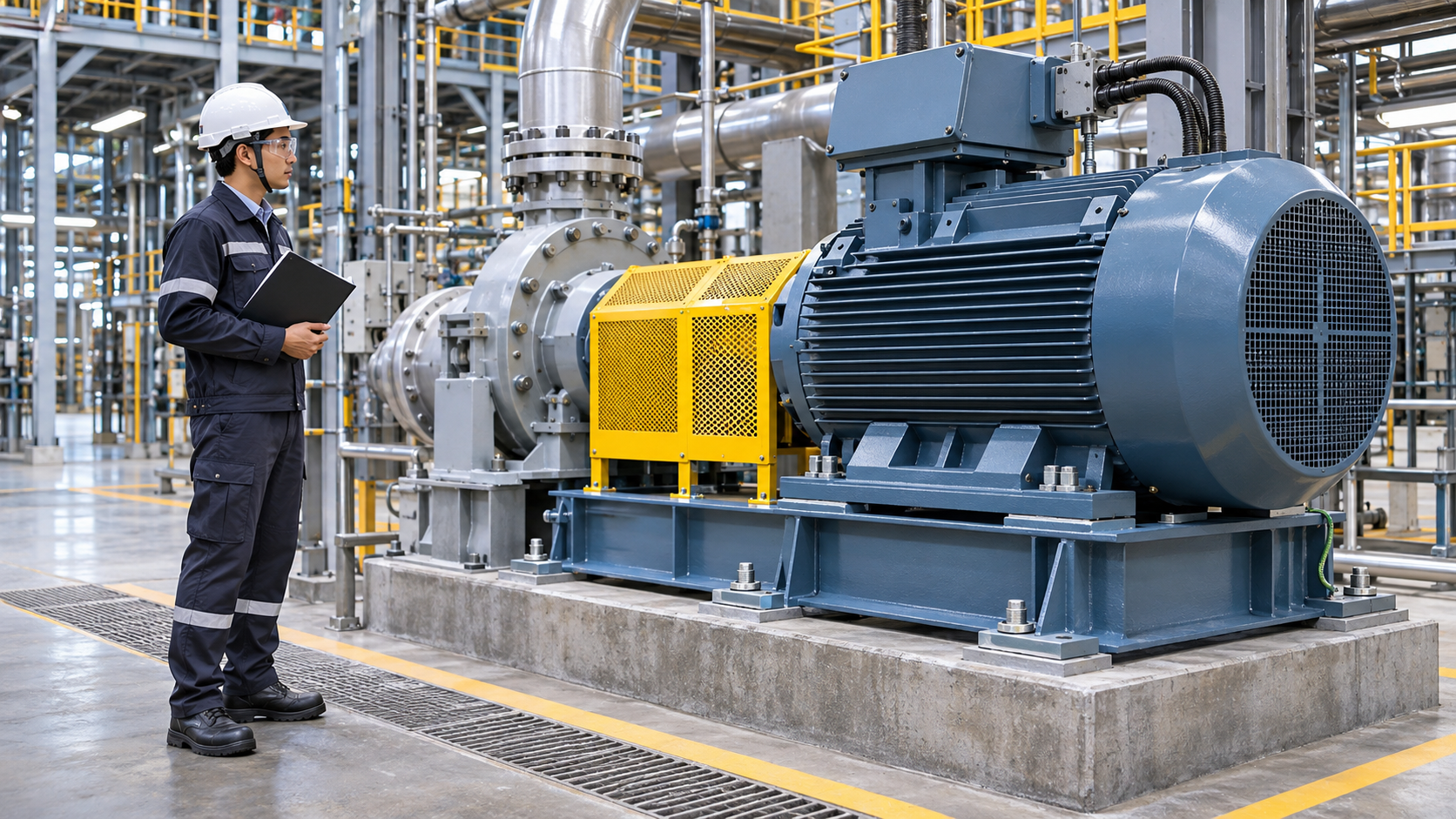
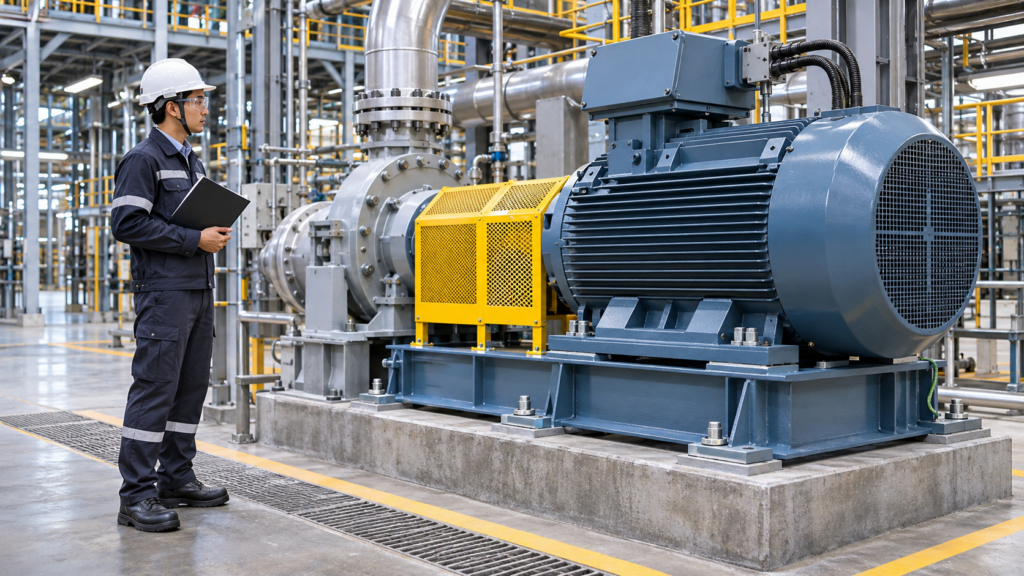
SAMPLE IMAGE 1 — MOTOR RETURNED TO SERVICE Suggested hero image: a large industrial motor operating in its installed environment, illustrating the transition from repair completion to in-service condition monitoring.
Does Passing a Post-Repair Test Mean the Motor Will Remain Reliable?
Not by itself.
A satisfactory post-repair test result is important evidence, but it represents the machine under the conditions and within the scope of that test.
For example, electrical measurements performed in a workshop may help assess winding insulation or other specified characteristics. Mechanical measurements during a test run may provide information about vibration or temperature under the test arrangement.
Those findings should be evaluated against the agreed acceptance criteria.
However, actual plant operation may introduce a different set of conditions, including coupled equipment, process load, ambient temperature, operating duty and installation-related influences.
The distinction is simple:
- Post-repair testing evaluates defined requirements at a particular stage.
- Return-to-service checks assess the machine and installation as they begin operating together.
- Condition trending evaluates how selected operating indicators change over time.
These activities complement one another. None should be treated as a substitute for the others.
What Is a Condition Trend, and Why Is It More Informative Than One Reading?
A condition trend is a sequence of observations or measurements collected over time, ideally under sufficiently comparable conditions.
One vibration reading may indicate the machine’s condition at the time of measurement. A series of vibration readings may show whether that condition is stable or changing.
The same principle can apply to bearing temperature, selected electrical operating data and other indicators relevant to a machine’s known failure modes.
That does not mean every increase or decrease is a fault.
A motor operating at a different load, speed or ambient temperature may show different values without having developed a new defect.
The purpose of trending is to distinguish changes that make sense in context from changes that require further investigation.
A Stable Value Can Be Useful Evidence
If a motor operates under similar conditions and selected measurements remain reasonably consistent, those observations may support the assessment that its operating condition is stable.
They do not prove that every component is free from defects.
A Changing Value Deserves Context
A rising vibration trend could prompt a review of alignment, looseness, bearing condition, operating load or other possible influences.
A rising temperature trend might require investigation of cooling, loading, ambient conditions, sensor location and other factors.
The trend identifies a change. It does not automatically establish the cause.
A Single Abnormal Reading Must Not Be Ignored
Trending is not a reason to delay action when a measurement exceeds an applicable safety, protection or operating limit.
If a critical alarm, trip condition or other urgent abnormality occurs, the appropriate operating procedure should take priority.
The best monitoring approach combines individual limits with meaningful trend interpretation.
Establishing a Useful Post-Repair Baseline
A baseline is a reference against which later measurements can be compared.
For a repaired machine, the baseline should represent an acceptable and reasonably stable operating condition.
That may not be the first moment the motor is started.
Some equipment may experience changes during initial running or stabilization after repair. The appropriate baseline timing should therefore follow the machine’s operating and monitoring requirements.
What Should Be Recorded With a Baseline?
A numerical reading is more useful when the operating conditions are recorded with it.
Depending on the monitoring method, useful context can include:
- Measurement date and time
- Machine identification
- Measurement location and direction
- Operating speed and load
- Ambient or process conditions
- Instrument, sensor and measurement settings
- Relevant maintenance or operating observations
Where a motor operates in different regular duty conditions, more than one operating-state baseline may be appropriate.
The objective is to compare like with like as far as reasonably practicable.
Which Parameters Should Be Monitored After Motor Repair?
There is no universal list that suits every motor and generator.
The monitoring plan should reflect the machine’s criticality, design, failure history, available instrumentation and operating conditions.
Several commonly considered categories are discussed below.
1. Vibration
Vibration monitoring can provide information about changes in the dynamic behavior of rotating machinery.
Depending on the machine, measurements may be taken at bearing housings or other specified locations, while certain machines may also require shaft-relative vibration measurements.
It is important to preserve the measurement location, direction, frequency range and operating conditions when comparing results.
Overall vibration magnitude may be useful for monitoring, but more detailed analysis can be necessary to investigate particular mechanical or electrical influences.
A change in overall vibration does not, by itself, confirm whether the underlying issue is imbalance, misalignment, looseness or a bearing defect.
2. Bearing and Machine Temperatures
Temperature trends can help identify changes in the thermal behavior of a motor.
Useful measurements may include bearing-related temperature indicators, winding temperature sensors or other locations specified for the machine.
Interpretation requires care.
Higher ambient temperature, increased load, cooling-system changes and sensor-related factors can affect the result.
A meaningful comparison therefore considers the operating context as well as the measured value.

3. Electrical Operating Parameters
Current, voltage, phase balance and other operating measurements may help explain changes in motor performance when suitable instrumentation is available.
However, changes in process load or supply conditions can also influence electrical readings.
Electrical data should therefore be interpreted together with the machine’s duty and operating history rather than viewed as a standalone diagnosis.
4. Lubrication and Bearing-Related Indicators
For machines where bearing lubrication is part of the maintenance scope, oil condition, lubrication-system readings or other relevant indicators may support reliability monitoring.
The appropriate methods depend on bearing design and the installed lubrication system.
For example, a motor with rolling-element bearings may require a different monitoring approach from one using fluid-film bearings.
5. Periodic Offline Electrical Assessments
Some electrical checks, such as insulation resistance measurements, are performed with the equipment de-energized and under the appropriate safety procedure.
These readings should not be presented as ordinary live operating measurements.
When such results are trended, engineers should consider test method, applied voltage where applicable, temperature, moisture, measurement conditions and the relevant testing guidance.
A temperature-related change in insulation resistance should not automatically be interpreted as insulation deterioration.
A Practical Condition-Monitoring Matrix
The following table is an illustrative planning tool, not a universal monitoring specification.
| Parameter | What a Trend May Reveal | Important Context |
|---|---|---|
| Vibration | Changing dynamic behavior | Speed, load, measurement position, sensor method |
| Bearing temperature | Changes in thermal operating condition | Ambient temperature, load, lubrication, sensor location |
| Motor current | Changes in electrical load or operating behavior | Supply voltage, operating load, speed and duty |
| Winding temperature | Changes in winding thermal condition | Measurement method, cooling, load and ambient conditions |
| Lubrication indicators | Changes in lubricant or lubrication-system condition | Bearing design, sampling method, operating hours |
| Offline insulation assessment | Changes in selected insulation-related characteristics | De-energized test conditions, temperature and procedure |
Monitoring indicators should be selected for the equipment and the failure mechanisms the maintenance team is trying to detect.
Why Workshop Test Records Still Matter
The transition from a repair workshop to a production facility should not separate the machine from its repair history.
Workshop inspection and testing records may provide valuable context for the maintenance team.
They can identify the work performed, the checks completed, the applicable acceptance criteria and any relevant limitations.
Those records can help the team understand which conditions were evaluated before the equipment returned to service.
However, an insulation test performed on a stationary machine in the workshop is not directly interchangeable with a vibration measurement taken while the installed machine is operating.
Each result answers a different engineering question.

Why Operating Conditions Must Be Recorded Alongside Trends
Consider a motor that operates at several different load levels during the production day.
If vibration or temperature measurements are taken at different operating conditions, a direct comparison may be misleading.
A change that appears significant on a graph may partly reflect a different load, speed or process condition.
Engineers should therefore document the conditions most likely to influence the selected measurements.
Where variable-speed operation is involved, an appropriate monitoring strategy may require separate reference ranges or analysis for different speed regions.
The goal is not to force every reading into one straight line. It is to interpret changes against a relevant operating reference.
How to Build a Post-Repair Condition Monitoring Plan
Step 1: Review the Repair and Return-to-Service Records
Identify the work performed, the applicable test results, known observations and any recommendations that affect the monitoring strategy.
Do not assume that a successful winding repair removes every possible mechanical, installation or operating-system risk.
Step 2: Identify Relevant Failure Modes
Select monitoring parameters based on the machine’s design, criticality and relevant risks.
A motor with a history of vibration issues may need particular attention to dynamic behavior. Another machine may require greater attention to thermal performance, lubrication or electrical operating conditions.
The history informs the plan, but it should not restrict engineers to considering only the previously observed fault.
Step 3: Establish Appropriate Measurement Points
Define where and how measurements should be taken so that future results are comparable.
Use appropriate instruments, sensors and methods for the selected parameters.
Where measurement repeatability is important, record the location, orientation and settings.
Step 4: Establish Baselines Under Suitable Conditions
Collect reference measurements when the machine is operating in an acceptable and representative state.
Initial stabilization or running-in effects should be considered where applicable.
The baseline should represent the conditions against which future readings will be assessed.
Step 5: Set Monitoring Frequency and Review Responsibilities
The interval between measurements should reflect the equipment’s criticality, operating duty, available instrumentation and risk assessment.
High-criticality machines may need different arrangements from equipment with limited operational consequences.
There is no single monitoring interval that is correct for every repaired motor.
Step 6: Define What Happens When a Change Is Observed
A monitoring plan is incomplete unless the team knows how to respond to abnormal results.
The response should consider existing plant alarms, applicable limits, trend significance, operating conditions and the consequences of continued operation.
Important deviations may require further diagnostics, closer observation, corrective action or equipment shutdown under the approved procedures.
A trend should support a decision, not replace engineering judgement.
How to Read a Trend Without Jumping to a Conclusion
Trend data is useful because it provides a history. But the shape of a graph is not a diagnosis.
For example, an increase in vibration might occur after a change in operating speed, process conditions, coupling arrangement or bearing condition.
The next step is to review the operating record and investigate plausible causes using appropriate diagnostic methods.
Likewise, a change in motor temperature should be considered alongside load, cooling performance and environmental conditions before a cause is assigned.
Condition trending helps engineers decide when more information is needed. It does not prove a root cause on its own.
SAMPLE IMAGE 3 — CONDITION TREND CHART Suggested conceptual chart illustrating stable and changing measurement patterns over time. Do not use invented trend values as real machine data.
What Can Condition Trending Actually Improve?
The most useful outcome is better-informed maintenance decisions.
Trend records may help a team recognize developing changes, evaluate whether an issue needs further diagnosis and communicate observations during engineering discussions.
They can also provide a record for future maintenance planning and comparison after subsequent work.
However, condition trending does not guarantee that failures will be detected in advance.
Some failures develop too quickly, are not adequately represented by the selected measurements or occur in ways that available sensors cannot detect.
Monitoring methods must therefore be selected and maintained according to the machine’s risks and operating needs.
A Practical Handover Checklist After Motor Repair
Before the repaired motor enters routine operation, the maintenance and reliability teams can review the following questions:
- Are the completed repair scope and relevant test records available?
- Have return-to-service checks and installation requirements been addressed?
- Which operating parameters should be monitored?
- Where and how will measurements be collected?
- Under which operating conditions will the baseline be established?
- Who will review the data and investigate abnormal changes?
- Which plant limits or response procedures apply?
- How will findings be communicated to engineering and maintenance personnel?
These questions connect the completed repair with the condition-monitoring activities that follow.
Repair Completion Is a Milestone, Not the End of Reliability Work
A repaired motor must first satisfy its applicable repair and verification requirements.
After it returns to service, the operating history provides a different kind of evidence.
Vibration, temperature and other relevant measurements can help show how the machine behaves over time, provided the data is collected consistently and interpreted in context.
One reading may be necessary for acceptance or immediate action. A trend adds information about change.
For maintenance teams responsible for critical industrial equipment, both perspectives matter.
The stronger reliability approach is not to choose between testing and trending. It is to use each for the question it is designed to answer.
Discuss Motor Repair and Technical Assessment With Kamol Engineering
Kamol Engineering Services Co., Ltd. provides motor and generator rewinding and electrical testing services.
When discussing a repair or post-repair observation, useful information includes the machine nameplate, completed repair scope, available test records, operating history and any observed changes in vibration, temperature or electrical performance.
These details can help make the technical discussion more focused.
Explore Electrical Testing Services
Explore Stator Rewinding Services
Frequently Asked Questions
What is post-repair condition monitoring?
Post-repair condition monitoring is the collection and evaluation of relevant machine-condition information after equipment returns to service. It can include vibration, temperature, electrical operating data and other measurements selected for the machine.
Why is condition trending better than relying on one reading alone?
Trending adds information about how a selected measurement changes over time. A single reading may support an acceptance or safety decision, while a sequence of comparable readings can help identify developing changes.
Should a motor be monitored immediately after repair?
Appropriate return-to-service checks should be performed according to the machine and installation requirements. A stable monitoring baseline may be established after the machine reaches suitable operating conditions, considering any relevant stabilization period.
Which motor parameters should be trended?
Common candidates include vibration, bearing temperature, winding temperature and electrical operating data. The appropriate selection depends on the machine type, criticality, failure modes and available instrumentation.
Can increasing vibration prove that a motor has a bearing fault?
No. A vibration increase may have several possible explanations. The result should be evaluated in the context of operating conditions and investigated using suitable diagnostic methods.
Can insulation resistance be monitored while the motor is energized?
Conventional insulation resistance testing is performed under an appropriate de-energized test procedure. It should not be described as an ordinary live operating measurement. Other online insulation-related monitoring technologies, where applicable, are separate methods.
Does ISO 20816 provide one vibration limit for every motor?
No. The applicable part of the ISO 20816 series, machine type, measurement configuration and operating conditions must be considered. Universal limits should not be applied without checking the relevant scope and criteria.
Does condition trending guarantee that a future failure will be detected?
No. Monitoring improves the available information but cannot detect every possible failure mechanism or guarantee advance warning.
Technical References
ISO 17359:2018 — Condition Monitoring and Diagnostics of Machines: General Guidelines
ISO 20816-3:2026 — Mechanical Vibration Measurement and Evaluation for Industrial Machines
EASA — ANSI/EASA AR100-2025: Recommended Practice for the Repair of Rotating Electrical Apparatus
Kamol Engineering — Electrical Testing
Editorial note: This article provides general educational guidance for post-repair condition monitoring. Monitoring methods, baseline conditions, alarm criteria, test procedures and measurement intervals must be selected for the specific equipment and application. This article does not claim that Kamol Engineering supplies an ongoing remote monitoring service or that the company collected any trend values shown in a conceptual illustration. Workshop testing and plant condition monitoring must not be treated as interchangeable activities.